Explore how concussions affect brain function, balance, coordination, and everyday activities. Learn about common symptoms, causes, treatment approaches, and the importance of proper medical evaluation and recovery.
A concussion is a type of traumatic brain injury that can occur after a blow to the head or a sudden force that causes the brain to move rapidly inside the skull. It commonly happens during sports activities, falls, and automobile accidents. Although some concussions may appear mild initially, their effects can influence how a person thinks, moves, feels, and manages everyday responsibilities.
Understanding how a concussion affects the brain, balance, and daily activities is important for recognizing symptoms and knowing when to seek appropriate care.
How Does a Concussion Affect the Brain?
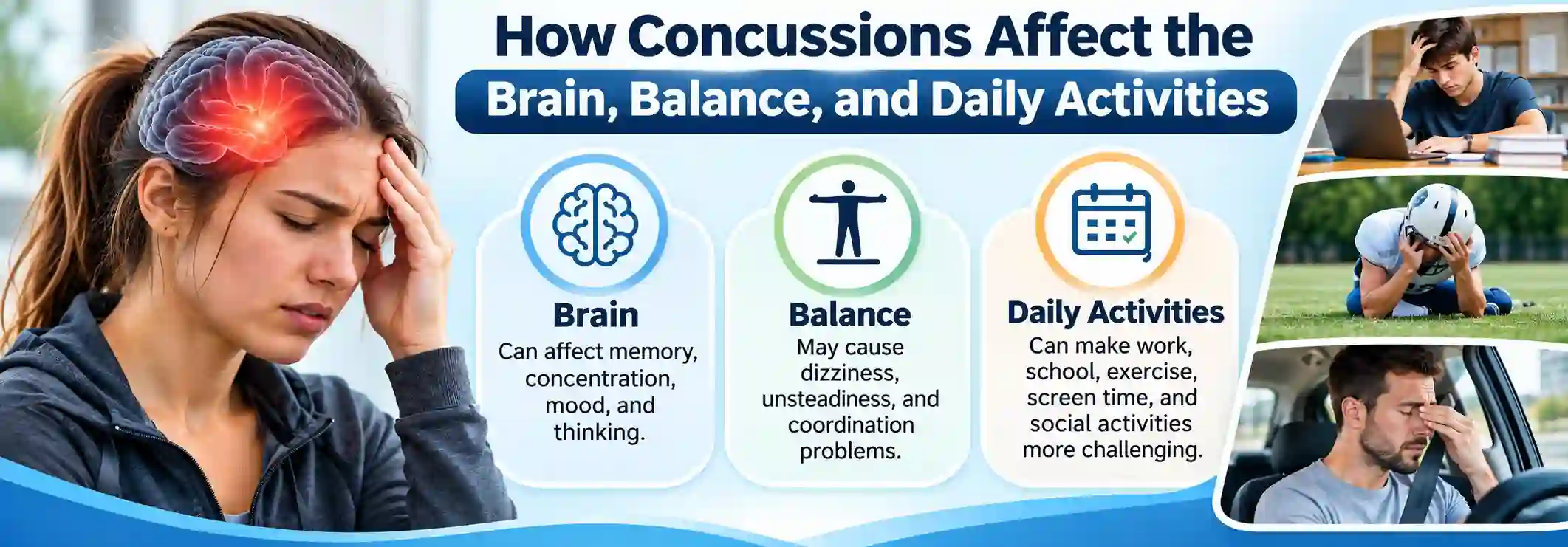
The brain controls essential functions such as memory, concentration, coordination, communication, and emotional responses. Following a concussion, normal brain activity can be temporarily disrupted.
This disruption may cause several symptoms, including:
- Headaches: A person may experience ongoing headaches or pressure in the head.
- Memory problems: Remembering recent conversations, instructions, or events may become difficult.
- Difficulty concentrating: Reading, studying, working, or completing familiar tasks may require more effort.
- Sensitivity to light and noise: Bright screens, loud environments, and busy surroundings may become uncomfortable.
- Fatigue: Even simple mental or physical activities may leave someone feeling unusually tired.
- Mood changes: Irritability, anxiety, sadness, or emotional sensitivity may occur.
Symptoms can appear immediately or develop several hours or days after the incident. Their intensity and duration vary from person to person.
Why Can a Concussion Affect Balance and Coordination?
Balance depends on communication between the brain, inner ear, eyes, muscles, and joints. These systems work together to help the body understand its position and respond to movement.
A concussion can interfere with this communication, sometimes leading to dizziness, unsteadiness, or difficulty coordinating movements.
For example, someone recovering from a concussion may experience:
- Feeling dizzy when standing or walking.
- Difficulty maintaining balance while turning.
- Unsteadiness when walking on uneven surfaces.
- Discomfort with quick head movements.
- Problems with coordination during physical activities.
These symptoms can make everyday movements feel unfamiliar or uncomfortable. Activities such as climbing stairs, driving, exercising, or walking through crowded places may become more challenging.
How Can Concussions Affect Daily Activities?
The effects of a concussion are not limited to physical discomfort. They can influence several aspects of daily life.
At work or school: Difficulty concentrating, remembering information, and processing instructions may affect productivity and learning.
During physical activities: Exercise, sports, and household tasks may trigger headaches, dizziness, or fatigue, particularly when activity levels increase too quickly.
While using screens: Computers, televisions, and mobile phones may worsen headaches or sensitivity to light.
During sleep: Some people experience changes in their sleeping patterns, including difficulty falling asleep, sleeping more than usual, or feeling tired throughout the day.
In social situations: Busy environments, conversations, and loud gatherings may become overwhelming, sometimes causing people to withdraw from activities they previously enjoyed.
Recognizing these changes can help individuals understand why recovery may require adjustments to their normal routines.
Common Causes of Concussions
Concussions can happen in different situations.
Some common causes include:
- Sports-related impacts: Contact sports, falls, and collisions can cause head injuries.
- Auto accidents: Sudden acceleration, deceleration, or impact during a collision may cause the brain to move rapidly.
- Falls: Slipping, falling down stairs, or hitting the head against a hard surface can result in a concussion.
- Physical accidents: Unexpected impacts during everyday activities can also cause head injuries.
Depending on how the injury occurred, appropriate care may involve medical evaluation and individualized recovery guidance. Auto accident concussion treatment and sports concussion treatment should always begin with an appropriate assessment of the head injury.
Understanding Concussion Treatments and Recovery
There is no single recovery timeline that applies to everyone. Most people improve within a few weeks, although some experience symptoms for longer.
Appropriate concussion treatments depend on the person’s symptoms, injury history, and overall condition. Initial management generally involves medical evaluation, guidance on activity levels, adequate sleep, and a gradual return to normal activities. A healthcare professional may recommend additional assessment or rehabilitation when specific symptoms persist.
Returning to sports, driving, work, or strenuous exercise too soon may create additional risks. Following professional guidance is important, particularly before resuming activities that could result in another head injury.
Anyone searching for help with concussion symptoms near me should prioritize a qualified medical evaluation rather than relying on self-diagnosis.
When Should You Seek Medical Attention?
A suspected concussion should be evaluated by a healthcare professional. Seek emergency medical attention if symptoms include a worsening headache, repeated vomiting, seizures, increasing confusion, slurred speech, weakness, unequal pupils, or difficulty waking up.
Final Thoughts
A concussion can affect much more than the head. Changes in brain function, balance, concentration, and coordination may influence nearly every part of daily life. Recognizing symptoms early, receiving an appropriate evaluation, and following a gradual recovery plan can help individuals navigate the healing process more safely. Understanding these effects is an important step toward protecting long-term brain health and returning to everyday activities responsibly.
A concussion can temporarily affect brain function, causing headaches, dizziness, confusion, memory problems, and difficulty concentrating.
Yes. A concussion may disrupt the brain systems responsible for balance and coordination, leading to dizziness, unsteadiness, and difficulty walking.
Many people recover within a few weeks, but some experience symptoms for longer. Recovery time varies depending on the injury and individual factors.
Concussions may make driving, reading, working, exercising, and concentrating more challenging due to headaches, fatigue, dizziness, or sensitivity to light and noise.
Seek an evaluation if symptoms persist or interfere with daily activities. Get emergency care for worsening headaches, repeated vomiting, seizures, weakness, or increasing confusion.