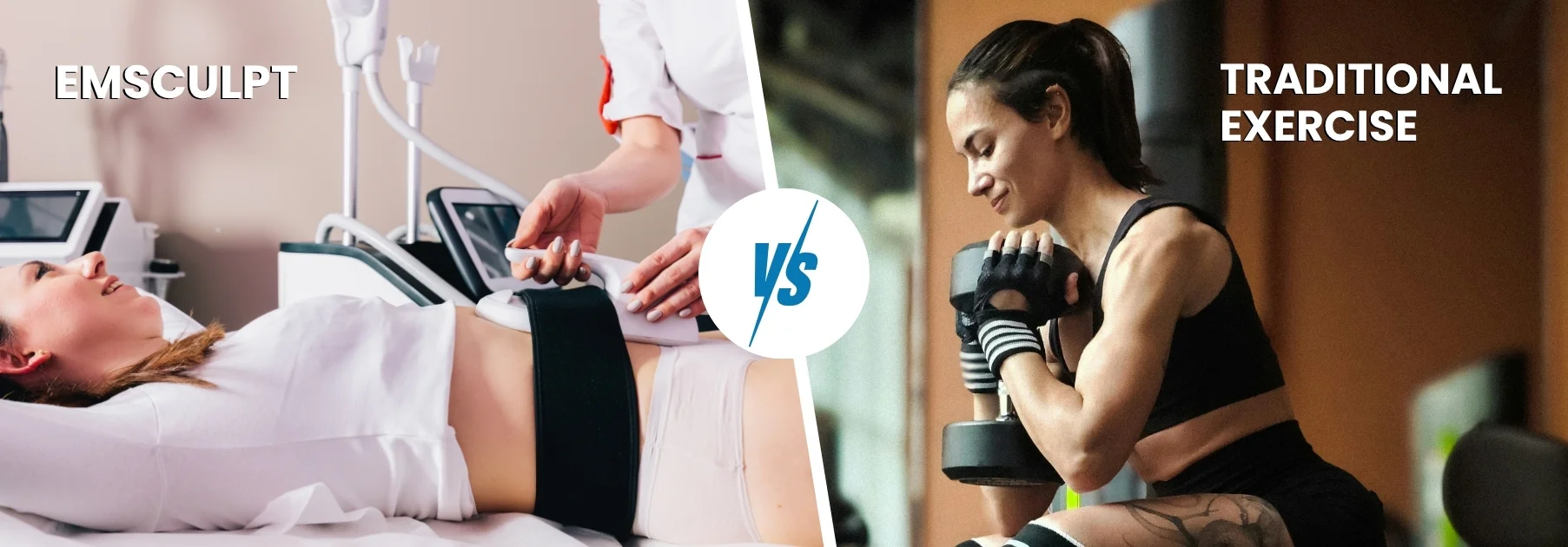
Emsculpt and traditional exercise take different approaches to improving muscle tone and body contours. While exercise builds strength and supports overall fitness over time, Emsculpt uses targeted muscle stimulation that may produce visible changes in treated areas more quickly.
Body contouring has traditionally been linked to exercise, nutrition, and long-term fitness routines. Recently, treatments like Emsculpt have changed the conversation by offering a non-invasive approach to muscle toning and fat reduction. As more people compare these two methods, one question comes up frequently: which one delivers faster body contouring results?
The answer depends on how body contouring is being measured. Exercise and Emsculpt affect the body in very different ways, and each approach comes with its own strengths and limitations.
How the Body Changes with Traditional Workouts
Traditional exercise improves body composition gradually. Strength training builds muscle through repeated resistance and recovery, while cardio helps increase calorie expenditure and support fat loss over time.
This process is effective, but it usually requires:
- Consistent workouts
- Progressive training intensity
- Proper nutrition
- Recovery time
- Long-term commitment
Visible body contouring through exercise often takes months rather than weeks. Muscle growth happens slowly, especially for beginners or individuals returning to fitness after a long break.
Fat loss can also be unpredictable. Some areas of the body respond quickly to exercise, while others hold onto fat despite regular training. Genetics, hormones, stress, sleep, and age all influence how quickly changes become visible.
How Emsculpt NEO Fits Into Body Contouring
As body contouring technology has evolved, Emsculpt NEO offers an expanded approach by combining electromagnetic muscle stimulation with radiofrequency (RF) energy. While Emsculpt primarily focuses on muscle activation, Emsculpt NEO is designed to address both muscle conditioning and fat reduction in targeted areas. This combination may appeal to people looking for a more comprehensive body contouring treatment while still maintaining regular exercise and healthy lifestyle habits.
How Emsculpt Works Differently
Emsculpt takes a more targeted approach. Instead of relying on voluntary movement, the treatment uses electromagnetic energy to trigger rapid muscle contractions in specific areas of the body.
These contractions occur at an intensity that is difficult to achieve during regular workouts. During a single session, muscles may contract thousands of times within a short period.
The body responds to this stimulation by:
- Strengthening muscle fibers
- Improving muscle conditioning
- Increasing muscle engagement
- Triggering metabolic activity in nearby fat tissue
Because the treatment focuses directly on muscle activation, some people notice visible firmness and definition more quickly in treated areas compared to traditional exercise alone.
Which Method Produces Faster Results?
If the comparison is based strictly on visible contouring in targeted areas, Emsculpt may produce faster short-term changes for some individuals. The concentrated muscle stimulation can create noticeable firmness within weeks, particularly in the abdomen or glutes.
Traditional exercise generally takes longer because the process depends on repeated effort over time. Building muscle naturally through workouts requires consistency, recovery, and gradual progression.
However, faster results do not necessarily mean better overall fitness.
Exercise improves multiple systems throughout the body, including:
- Cardiovascular health
- Endurance
- Flexibility
- Coordination
- Joint stability
- Bone strength
Emsculpt focuses mainly on localized muscle conditioning and body contouring rather than total-body fitness.
The Role of Fat Loss in Body Contouring
Many people associate body contouring only with fat reduction, but muscle tone plays an equally important role. A person can lose weight without achieving visible muscle definition if muscle mass remains low.
Traditional exercise combined with proper nutrition remains one of the most effective approaches for overall fat reduction throughout the body.
Emsculpt may help reduce fat in treated areas, but it is not designed as a major weight-loss treatment. Instead, it focuses more on improving muscle tone while influencing nearby fat cells.
This distinction matters because visible contouring depends on both muscle development and body fat percentage.
Time Commitment and Lifestyle Factors
Another major difference involves time commitment. Exercise requires ongoing weekly effort and long-term consistency. Results depend heavily on lifestyle habits outside the gym as well.
Emsculpt sessions are shorter and more concentrated. Most treatment plans involve several sessions over a few weeks, with no workout recovery period afterward.
For people with limited time or difficulty activating certain muscle groups through exercise alone, this can feel appealing. Still, long-term maintenance usually requires continued physical activity and healthy habits regardless of the treatment method used.
Are They Really Competing Approaches?
In reality, Emsculpt and traditional exercise are not direct replacements for one another. Exercise supports full-body physical health, while Emsculpt focuses more specifically on muscle stimulation and localized contouring.
Many individuals use Emsculpt alongside existing fitness routines rather than instead of them. Exercise builds long-term strength, endurance, and overall health, while Emsculpt may help enhance muscle engagement in targeted areas.
For people looking strictly at how quickly a specific area may appear firmer or more toned, Emsculpt may deliver visible changes sooner. But long-term body conditioning and overall wellness still rely heavily on movement, nutrition, recovery, and consistency over time.
Emsculpt may produce visible changes in targeted areas more quickly than traditional exercise for some people. Exercise typically requires consistent training over a longer period to build muscle and change body composition.
No. Emsculpt is not a replacement for regular exercise. It focuses on targeted muscle stimulation and body contouring, while exercise supports cardiovascular fitness, strength, endurance, flexibility, and overall health.
Some people may notice changes in muscle tone and firmness within a few weeks. Results vary based on the treated area, individual factors, and the treatment plan.
Emsculpt NEO combines electromagnetic muscle stimulation with radiofrequency energy to target muscle conditioning and fat reduction in treated areas. It serves a different purpose than exercise, which supports broader fat loss and overall fitness.
Yes. Emsculpt can be used alongside an active lifestyle and regular exercise. Combining targeted muscle stimulation with strength training, physical activity, proper nutrition, and recovery can support ongoing body-contouring goals.